Σφακιανάκης Αλέξανδρος
ΩτοΡινοΛαρυγγολόγος
Αναπαύσεως 5 Άγιος Νικόλαος
Κρήτη 72100
00302841026182
00306932607174
alsfakia@gmail.com

Αρχειοθήκη ιστολογίου

! # Ola via Alexandros G.Sfakianakis on Inoreader

Η λίστα ιστολογίων μου

Τετάρτη 11 Μαΐου 2022

Correction to: Severe Dysbiosis and Specific Haemophilus and Neisseria Signatures as Hallmarks of the Oropharyngeal Microbiome in Critically Ill Coronavirus Disease 2019 (COVID-19) Patients

alexandrossfakianakis shared this article with you from Inoreader
Several errors appeared in supplementary data for the corrected proof publication of this article (de Castilhos J, Zamir E, Hippchen T, et al. Severe Dysbiosis and Specific Haemophilus and Neisseria Signatures as Hallmarks of the Oropharyngeal Microbiome in Critically Ill Coronavirus Disease 2019 [COVID-19] Patients. Clin Infect Dis; https://doi.org/10.1093/cid/ciab902).
View on Web

Antibody response of heterologous vs homologous mRNA vaccine boosters against the SARS-CoV-2 Omicron variant: interim results from the PRIBIVAC study, A Randomized Clinical Trial

alexandrossfakianakis shared this article with you from Inoreader
Abstract
Background
Waning antibody levels post-vaccination and the emergence of variants of concern (VOCs) capable of evading protective immunity has raised the need for booster vaccinations. However, which combination of COVID-19 vaccines offers the strongest immune response against Omicron variant is unknown.
Methods
This randomized, subject-blinded, controlled trial assessed the reactogenicity and immunogenicity of different COVID-19 vaccine booster combinations. 100 BNT162b2-vaccinated individuals were enrolled and randomized 1: 1 to either homologous (BNT162b2 + BNT162b2 + BNT162b2; 'BBB') or heterologous mRNA booster vaccine (BNT162b2 + BNT162b2 + mRNA-1273; 'BBM'). Primary endpoint was the level of neutralizing antibodies against SARS-CoV-2 wild-type and VOCs at Day 28.
Results
51 participants were allocated to BBB and 49 to BBM; 50 and 48 respectively were analyzed for safety and immunogenicity outcomes. At Day 28 post-boost, mean SARS-CoV-2 spike antibody titers were lower with BBB (22,382  IU/mL 95% CI, 18,210 to 27,517) vs BBM (29,751  IU/mL 95% CI, 25,281 to 35,011, p = 0.034) as was the median level of neutralizing antibodies: BBB 99.0% (IQR 97.9 to 99.3%) vs BBM 99.3% (IQR 98.8 to 99.5%, p = 0.021). On sub-group analysis, significant differences in mean spike antibody titer and live Omicron neutralization titer was only observed in older adults. Median surrogate neutralizing antibody level against all VOCs was also significantly higher with BBM in older adults, and against Omicron was BBB 72.8% (IQR 54.0 to 84.7%) vs BBM 84.3% (IQR 78.1 to 88.7%, p = 0.0073). Both vaccines were well tolerated.
Conclusions
Heterologous mRNA-1273 booster vaccination induced a stronger neutralizing response against the Omicron variant in older individuals compared with homologous BNT123b2.

View on Web

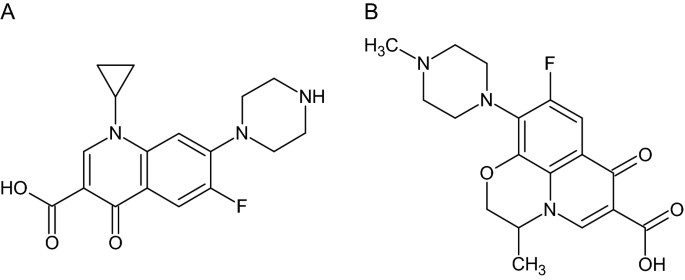
Simple, fast and reliable CE method for simultaneous determination of ciprofloxacin and ofloxacin in human urine

alexandrossfakianakis shared this article with you from Inoreader

41598_2022_11747_Fig1_HTML.png

View on Web

Possible mechanisms and biomarkers of resistance to vismodegib in SHH medulloblastoma

alexandrossfakianakis shared this article with you from Inoreader
National Council for Scientific and Technological Development10.13039/501100003593305647/2019-9201001/2014-4Children's Cancer InstituteWilliam Donald Nash Brain Tumour Research FellowshipBrain Tumour Foundation of Canada10.13039/501100000238Swifty Foundation10.13039/100017296North West Cancer Research10.13039/501100000357
View on Web

Analysis of fractured dental implant body from five different implant systems: a long-term retrospective study

alexandrossfakianakis shared this article with you from Inoreader
The aim of this study was to perform an analysis of the incidence of implant body fracture and to identify possible risk factors. A long-term follow-up retrospective evaluation of 3477 patients who received 8588 implants from five implant systems was performed. Overall, 2810 patients who received 7502 implants, with an average follow-up of 6.9 years, were included in the analysis. The overall body fracture rate was 0.49% (37/7502), among which 32.4% (12/37) were implants with a reduced diameter. (Source: International Journal of Oral and Maxillofacial Surgery)
View on Web

Τρίτη 10 Μαΐου 2022

First detection of SARS‐CoV‐2 Omicron BA.4 variant

alexandrossfakianakis shared this article with you from Inoreader

Abstract

At the time of writing, the world continues to witness the extraordinarily rapid evolution and selection of SARS-CoV-2, with the Omicron variants comprising five lineages known as BA.1, BA.2, BA.3, BA.4 and BA.5. In this study, there were 141 SARS-CoV-2 positive nasopharyngeal specimens tested using the RT-PCR BA.1 assay during January-April 2022. Of these, 83.0% specimens were BA.1. While the prevalence rate of BA.1 continued to decrease, BA.2 emerged. Interestingly, BA.4 was detected for the first time in Western Pennsylvania, United States. While the unexpected detection of BA.4 in our study is interesting, and even a single case, our finding underscores the importance of genomic surveillance as a critical tool for tracking emerging variants of SARS-CoV-2

This article is protected by copyright. All rights reserved.

View on the web

High-flow nasal cannula versus standard low-flow nasal cannula during deep sedation in patients undergoing radiofrequency atrial fibrillation catheter ablation: a single-centre randomised controlled trial

alexandrossfakianakis shared this article with you from Inoreader

13063.jpg

To our knowledge, there are few trials studying the effect of high-flow nasal cannula (HFNC) during deep sedation. Our hypothesis is that high-flow nasal cannula (HFNC) will prevent hypoxemia and desaturation ...
View on the web

Αρχειοθήκη ιστολογίου