Σφακιανάκης Αλέξανδρος
ΩτοΡινοΛαρυγγολόγος
Αναπαύσεως 5 Άγιος Νικόλαος
Κρήτη 72100
00302841026182
00306932607174
alsfakia@gmail.com

Αρχειοθήκη ιστολογίου

! # Ola via Alexandros G.Sfakianakis on Inoreader

Η λίστα ιστολογίων μου

Δευτέρα 4 Ιανουαρίου 2021

Pancreatic adenocarcinoma: molecular drivers and the role of targeted therapy

Cancer shared this article with you from Inoreader

10555.jpg

Abstract

Prognosis from pancreatic ductal adenocarcinoma (PDAC) continues to be poor despite the many efforts channeled to improve its management. Although the mainstay treatment is still traditional chemotherapy, recent advances highlighted a promising potential for targeted therapy in the management of this disease. Those advances emphasize the significance of timely genomic profiling of tumor tissue as well as germline testing of patients to identify potential markers of targeted therapy. While targeted therapy is reserved for a relatively small subset of patients with PDAC, ongoing research is uncovering additional markers, and targeted agents, that will hopefully translate to better outcomes for patients.

View on the web

Characterization of primary glioma cell lines derived from the patients according to 2016 CNS tumour WHO classification and comparison with their parental tumours

Cancer shared this article with you from Inoreader

11060.jpg

Abstract

Background

Gliomas represent about 80% of primary brain tumours and about 30% of malignant ones, which today don't have a resolution therapy because of their variability. A valid model for the study of new personalized therapies can be represented by primary cultures from patient's tumour biopsies.

Methods

In this study we consider 12 novel cell lines established from patients' gliomas and immunohistochemically and molecularly characterized according to the newly updated 2016 CNS Tumour WHO classification.

Results

Eight of these lines were glioblastoma cells, two grade III glioma cells (anaplastic astrocytoma and oligo astrocytoma) and two low grade glioma cells (grade II astrocytoma and oligodendroglioma). All cell lines were analysed by immunohistochemistry for specific glioma markers, respectively VIMENTIN, GFAP, IDH1R132, and ATRX. The methylation status of the MGMT gene promoter was also determined in all lines. The comparison of the immunohistochemical characteristics and of the MGMT methylation status of the lines with the tissues of origin shows that the cells in culture maintain the same characteristics.

Conclusions

Human cancer cell lines represent a support in the knowledge of tumour biology and in drug discovery through its facile experimental manipulation.

Trial registration

NCT 04180046.

View on the web

Cohesive cancer invasion of the biophysical barrier of smooth muscle

Cancer shared this article with you from Inoreader

10555.jpg

Abstract

Smooth muscle is found around organs in the digestive, respiratory, and reproductive tracts. Cancers arising in the bladder, prostate, stomach, colon, and other sites progress from low-risk disease to high-risk, lethal metastatic disease characterized by tumor invasion into, within, and through the biophysical barrier of smooth muscle. We consider here the unique biophysical properties of smooth muscle and how cohesive clusters of tumor use mechanosensing cell–cell and cell–ECM (extracellular matrix) adhesion receptors to move through a structured muscle and withstand the biophysical forces to reach distant sites. Understanding integrated mechanosensing features within tumor cluster and smooth muscle and potential triggers within adjacent adipose tissue, such as the unique damage-associated molecular pattern protein (DAMP), eNAMPT (extracellular nicotinamide phosphoribosyltransferase), or visfatin, offers an opportunity to prevent the first steps of invasion and metastasis through the structured muscle.

View on the web

Dose adjustment of venetoclax when co-administered with posaconazole: clinical drug–drug interaction predictions using a PBPK approach

Cancer shared this article with you from Inoreader

280.jpg

Abstract

Purpose

Venetoclax, a targeted anticancer agent approved for the treatment of chronic lymphocytic leukemia and acute myeloid leukemia, is a substrate of cytochrome P450 (CYP) 3A enzyme (CYP3A4). Posaconazole, commonly used to prevent invasive fungal infections in neutropenic patients with hematological malignancies, potently inhibits CYP3A4. The purpose of this evaluation was to predict venetoclax exposures following co-administration of posaconazole at doses not previously studied clinically.

Methods

Two physiologically based pharmacokinetic (PBPK) models were developed for posaconazole based on published parameters, one for an oral suspension and another for delayed released tablets. Parameter optimization, guided by sensitivity analyses, was conducted such that the models could replicate clinical exposures of posaconazole and drug–drug interactions with sensitive CYP3A substrates including venetoclax. The clinically verified posaconazole PBPK models were then utilized to predict DDI with a previously published venetoclax PBPK model at clinically relevant dosing scenarios.

Results

The posaconazole PBPK models predicted posaconazole exposure and DDI related fold changes with acceptable prediction errors for both posaconazole formulations. The model predicted exposures of venetoclax, when co-administered with a 300 mg QD dose of delayed release tablets of posaconazole, were in concordance with observed data. Increasing the posaconazole dose to 500 mg QD increased venetoclax exposures by about 12% relative to 300 mg QD, which were still within the venetoclax safe exposure range.

Conclusions

The posaconazole PBPK models were developed and clinically verified. Predictions using the robust PBPK model confirmed the venetoclax label recommendation of 70 mg in the presence of posaconazole at doses up to 500 mg QD.

View on the web

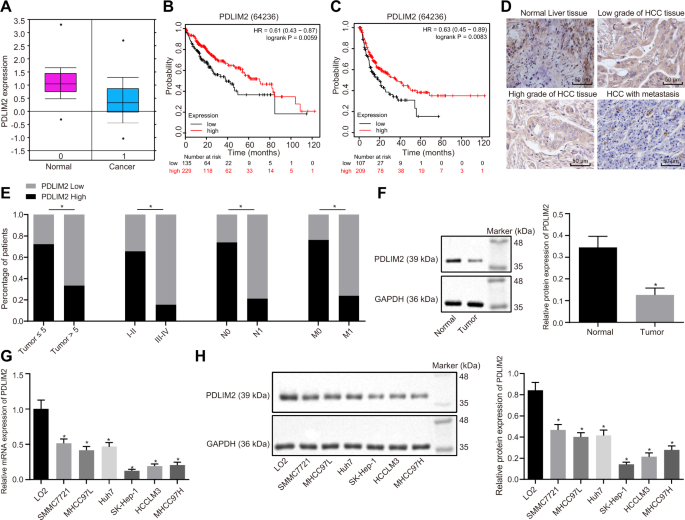
PDLIM2 prevents the malignant phenotype of hepatocellular carcinoma cells by negatively regulating β-catenin

Cancer shared this article with you from Inoreader

41417_2020_257_Fig1_HTML.png

View on the web

Implantation of rectosigmoid cancer in a preexisting anal fissure

Cancer shared this article with you from Inoreader

13691.jpg

Abstract

Colorectal cancer (CRC) rarely spreads by implantation. We report a case of implantation of rectosigmoid cancer in an anal fissure. A 70-year-old woman with a 15-year medical history of anal fissure was referred to our hospital with anal pain of 3-month duration. Colonoscopy revealed a rectosigmoid tumor and a 10-mm submucosal tumor at the anal verge. Biopsy of the rectosigmoid and anal tumors revealed that both were moderately differentiated adenocarcinomas, and abdominoperineal resection (APR) was performed. The anal adenocarcinoma was surrounded by squamous cell epithelium and mainly proliferated in the submucosal and muscular layers. The patient was diagnosed as having rectosigmoid cancer with implantation of cancer in a preexisting anal fissure. The patient remains well 43 months post-surgery with no sign of recurrence. Implantation of CRC in anal fissure is a rare occurrence. Nevertheless, performing adequate anal examination of patients with CRC befor e surgery and during follow-up is necessary. Further, it is important to perform preoperative large bowel examination of patients with benign anal diseases to prevent implantation of CRC.

View on the web

Κυριακή 3 Ιανουαρίου 2021

Αρχειοθήκη ιστολογίου